
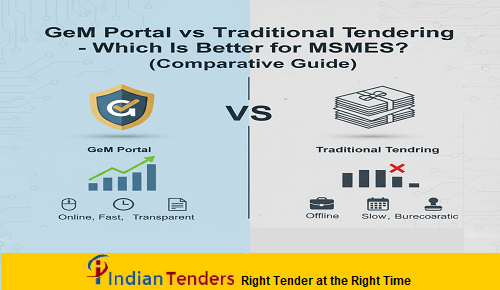
Micro, Small, and Medium Enterprises (MSMEs) form the backbone of India’s supply ecosystem - yet for years, traditional tendering processes created barriers such as high entry costs, lengthy paperwork, and limited visibility. With the launch of the Government e-Marketplace (GeM), the procurement landscape has changed dramatically.
But the big question remains: Is GeM truly better than traditional tendering platforms like CPPP, State e-tender portals, and departmental procurement systems?
This comparative guide breaks it down with facts, rules, economic impact insights, and MSME-focused advantages.
1. Transparency & Fairness
GeM Portal:
-
100% online, rule-based procurement
-
Real-time price comparison
-
Open competition with visibility of all bidders
-
Automated bid evaluation reduces human bias
-
Mandatory compliance as per GFR 2017 Rule 149
Traditional Tendering (CPPP / State Portals):
-
Document-heavy and manually screened
-
Limited bidder visibility
-
Risk of subjective evaluations
-
Multiple offline-to-online steps
Winner: GeM
It offers far greater transparency, auto-evaluation, and uniformity, especially beneficial for small businesses.
2. Ease of Registration & Seller Onboarding
GeM Portal-
Simple online registration
-
No tender fee, no EMD for registered MSEs
-
Catalogue listing for unlimited products
-
GeM SAHAY & GeM PMA support for MSMEs
Traditional Tendering
-
Multiple department registrations
-
High tender fee + EMD mandatory
-
Strict pre-qualification criteria
-
Limited guidance for new sellers
Winner: GeM
Lower entry barriers allow MSMEs and startups to participate comfortably.
3. Speed of Procurement
GeM Portal
-
Instant bidding and ordering (Direct Purchase, L1, RA, BOQ)
-
Auto-generated contracts
-
Faster buyer decision-making
-
Order cycle reduced from months to days
Traditional Tendering
-
Long bid preparation cycles
-
Multiple rounds (technical, financial, negotiation)
-
Offline approvals and manual evaluation
Winner: GeM
Ideal for products and services with fast-moving demand.
4. Cost Advantage
GeM Portal
-
Zero tender fee
-
Zero EMD for MSEs
-
No physical document submission
-
Reduced operating cost
Traditional Tendering
-
Payment for tender forms
-
EMD of ₹50,000 to ₹10 lakh (depending on tender size)
-
Hard-copy submissions, notarizations, courier charges
Winner: GeM
MSMEs save significantly on compliance and documentation costs.
5. Scope of Opportunities
GeM Portal
-
80,000+ product categories
-
300+ service offerings
-
Central, State, PSU & Autonomous bodies onboarded
-
Live demand-based opportunity feed
Traditional Tendering
-
Larger and high-value infra tenders
-
Engineering, EPC, road, and construction projects
-
State-specific opportunities
Winner: Tie
-
GeM is better for standard goods/services.
-
Traditional tendering suits big EPC and civil contractors.
6. Payment & Order Security
GeM Portal
-
The RA Bill module and payment protection ensure timely payments
-
Online invoice submission
-
Buyer rating system enforces accountability
Traditional Tendering
-
Manual billing
-
Delays due to administrative processes
-
Limited transparency on payment status
Winner: GeM
7. Compliance Requirements
GeM Portal
-
Mandatory documents: PAN, GSTIN, Udyam MSME
-
Transparent brand approval and OEM authorization
-
Strict catalogue validation
Traditional Tendering
-
Heavy technical documentation
-
Bid security, solvency certificates, turnover proofs
-
Years of experience required in most tenders
Winner: GeM
MSMEs with new product lines stand a better chance.
8. Economic Impact on MSMEs
GeM Portal
-
Over 39% of total order value awarded to MSMEs (as per AGM reports)
-
No middlemen → higher profit retention
-
Countrywide buyer reach boosts manufacturing output
-
Helps small units scale production & employment
Traditional Tendering
-
Suitable only for experienced businesses
-
Higher cost of participation reduces MSME involvement
Winner: GeM
Promotes inclusive growth and supports Digital India procurement reforms.
So… Which is Better for MSMEs?
| Factor | GeM Portal | Traditional Tendering |
| Transparency | ⭐⭐⭐⭐⭐ | ⭐⭐⭐⭐ |
| Ease of Entry | ⭐⭐⭐⭐⭐ | ⭐⭐ |
| Cost | ⭐⭐⭐⭐⭐ | ⭐⭐ |
| Opportunity Volume | ⭐⭐⭐⭐ | ⭐⭐⭐⭐ |
| Payment Process | ⭐⭐⭐⭐⭐ | ⭐⭐ |
| MSME Advantage | ⭐⭐⭐⭐⭐ | ⭐⭐ |
Final Verdict:
GeM is significantly better for MSMEs due to transparency, lower cost, faster cycles, and national-level visibility.
Traditional tendering still matters for large-scale infrastructure and EPC projects.
How IndianTenders.in Helps MSMEs Succeed on Both Platforms
IndianTenders.in supports sellers across GeM and traditional e-tendering through:
Opportunity Discovery
Daily alerts for:
-
GeM bids
-
CPPP tenders
-
State e-procurement tenders
-
PSU procurement opportunities
GeM Catalogue Support
-
Brand approval
-
Catalogue drafting
-
RA/BOQ bidding guidance
Tender Advisory & Consultancy
-
Bid documentation
-
Eligibility checks
-
Technical compliance reviews
-
L1 pricing strategy
-
Reverse auction strategy
One-Click Registration
Click here to register on IndianTenders.in
This hybrid support ensures MSMEs never miss opportunities - whether on GeM or traditional platforms.
Conclusion
Both platforms serve unique purposes, but for MSMEs seeking faster growth, lower entry barriers, and consistent government demand, GeM stands out as the preferred choice. However, combining GeM participation with selected tendering opportunities creates the strongest long-term business pipeline.
With expert support from IndianTenders.in, MSMEs can navigate both worlds confidently and win more government contracts with ease.
Tags
#GeMvsTraditionalTendering #GeMComparison #GovernmentProcurement #MSMEIndia #GeMvsCPPP #GeMPortalBenefits #PublicProcurementIndia #IndianTenders #DigitalProcurementIndia